Initial Days upon Resumption in September 1976
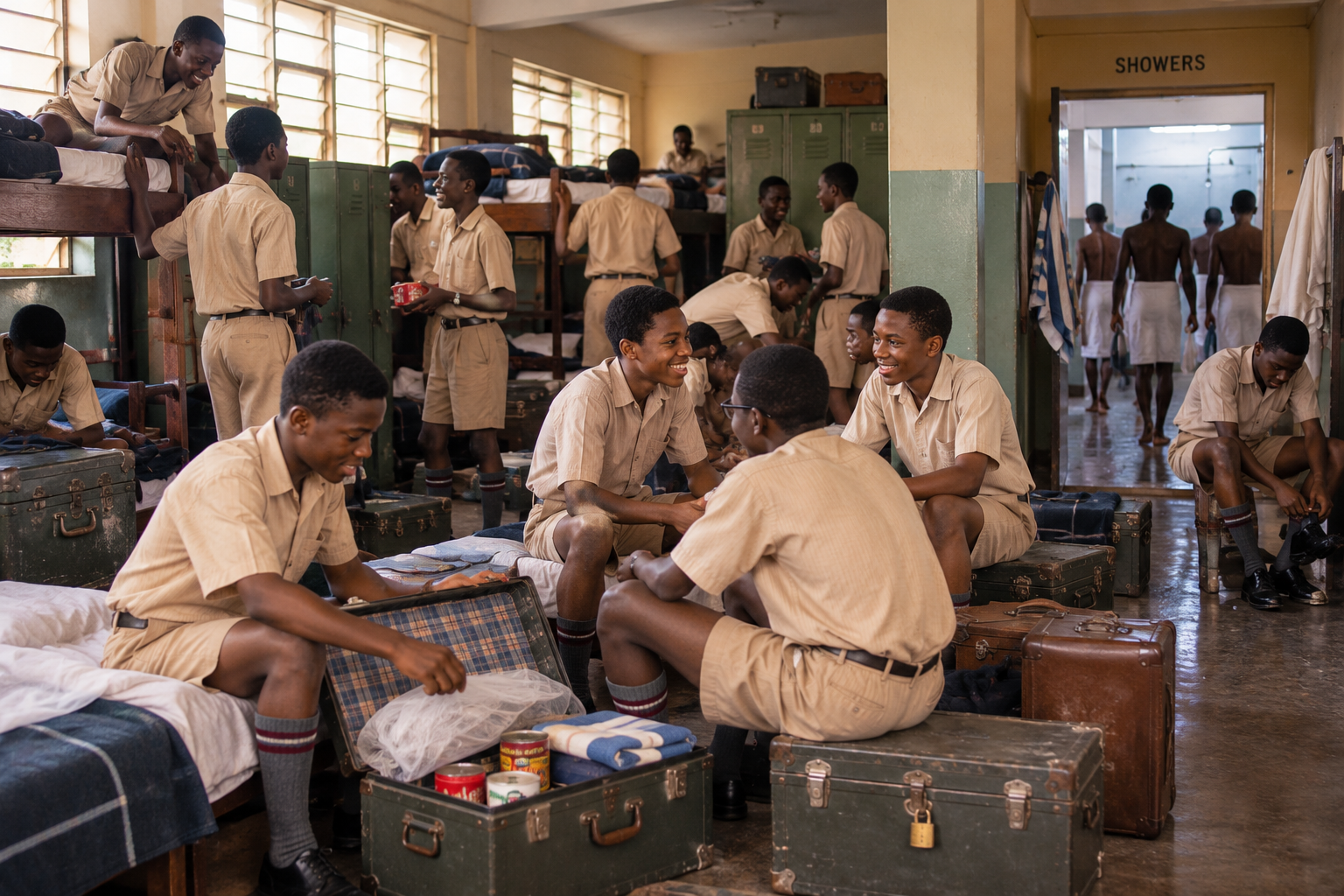
The resumption weekend at the boarding house was a flurry of largely unfamiliar faces and voices, a stream of young boys carrying metal portmanteaus complete with padlocks and stuffed with mosquito nets, provisions such as tins of beverages, milk, snacks including biscuits. Each suitcase specially packaged to fortify us against the looming unknown, some even came with first-aid material inclusive of bandages, plaster and ointments. We were assigned to our respective blocks and rooms. The dormitory was alive with chit-chat mainly from the returning students of the older classes whilst those of us 1st year students were largely silent as we tried to understand and adapt to the new environment we were now being immersed into.
We the new-comers quickly bonded together and created our own group getting to know one another. Some knew themselves as they had come from same primary school, a few knew more of the school traditions as they had elder brothers in the school. Nonetheless we were
largely strangers at first but became drawn together by the shared similar situation of new
environment and finding comfort in each other’s company whilst waiting for the boarding life to unravel.
Some seniors would command that we give them out of our provisions, and of course they
had their way. Not everyone appreciated this at the time, but over the years one can reflect that it taught us to share, to let go of possessiveness, and to recognize that generosity often begins in small, reluctant acts.
The joy, laughter, varying accent, banter and apparent friendship from our seniors seemed spontaneous and infectious. This was indeed a welcome relief to some of us filled with apprehension as to what laid ahead for a young boy away from home for the first time. This had an instantaneous calming effect on our nervousness as the warmth of their camaraderie was real.
The showers at the far end of the blocks became a pilgrimage in the mornings, as with everyone having soap and sponge in hand and wrapped in a towel, each boy marched quickly to the lavatory and queued up for a shower. Gradually we got accustomed to the unrelenting coldness of the spraying waters despite the daily discomfort as it seemed that the cold sting lost its bite more and more as the days went by. In a way, it was as if our bodies adapted, our minds adjusted and what initially felt unbearable became a routine rhythm that paled into insignificance. In a way and in retrospect, the school was teaching us that discipline may not always be about rules, but about training the body and mind to accept what they cannot change. After all, as the English say “what does not kill you makes you stronger” and this is further reinforced in the Yoruba saying of “Sùúrù ni baba ìwà” meaning patience is the father of character.
House work was mandatory. Scrubbing the toilets and walls was dreaded, yet it was a necessary chore that taught diligence and humility. Sweeping rooms was soothing relief, but the real take-away was that no boy escaped the cycle. A fitting Yoruba adage that comes to mind is “Ọmọ tó bá mọ́ ọwọ́ wẹ̀, á bá àgbà jẹun” meaning the child who washes his hands will eat with elders.
With hindsight, those responsibilities became the quiet beginnings of endurance,
teaching us that dignity often hides in ability to undertake tedious, repetitive jobs.
Submitted by:
Lanre Bamkole (3205, Swanston, 1976 Set)